
Unison Solutions’ biogas conditioning system for the City of Racine, Wisconsin, is featured in BiogasWorld’s 2026 Showcase Report.
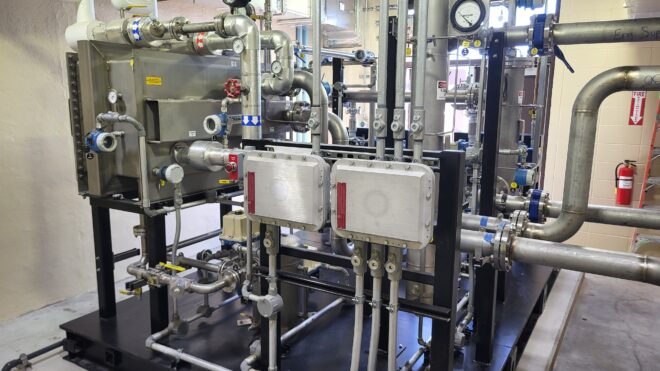
The feature covers the system that Unison designed and manufactured for Racine’s wastewater treatment plant on Lake Michigan. Low hydrogen sulfide levels in the plant’s biogas allowed H₂S removal on the dry side of the system, upstream of siloxane removal, which reduced the footprint and simplified piping. The conditioned biogas fuels engines that generate roughly 56% of the plant’s energy needs.
Read the article below.
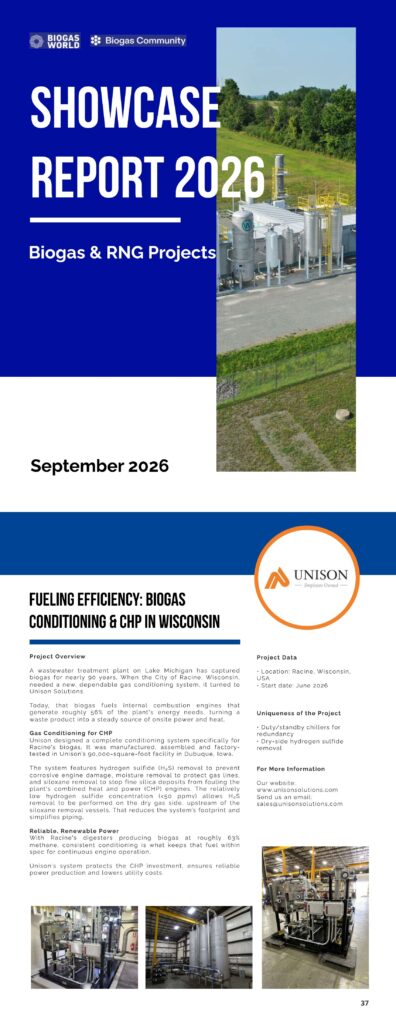
Fueling Efficiency: Biogas Conditioning & CHP in Wisconsin
Project at a Glance
- Location: Racine, Wisconsin
- Start date: June 2026
- Unique features:
- Duty/standby chillers for redundancy
- Dry-side hydrogen sulfide removal
Project Overview
A wastewater treatment plant on the shores of Lake Michigan has been capturing its biogas since opening nearly 90 years ago. When the City of Racine, Wisconsin, needed a new, dependable gas conditioning system, it turned to Unison Solutions.
Today, that biogas fuels internal combustion engines that generate roughly 56% of the plant’s total energy needs, turning what was once a waste product into a steady source of onsite power and heat.
Gas Conditioning for CHP
Unison designed a complete conditioning system engineered specifically for Racine’s biogas. It was manufactured, assembled, and factory-tested in Unison’s 90,000-square-foot facility in Dubuque, Iowa.
The system features hydrogen sulfide (H₂S) removal to prevent corrosive damage to engine components, moisture removal to keep water vapor from condensing and damaging gas lines, and siloxane removal to stop fine silica deposits from fouling cylinders, valves, and heat exchangers in the plant’s combined heat and power (CHP) engines. The relatively low hydrogen sulfide concentration (<50 ppmv) allows H₂S removal to be performed on the dry gas side, upstream of the siloxane removal vessels. That reduces the system’s footprint and simplifies piping.
Reliable, Renewable Power
With Racine’s digesters producing biogas at roughly 63% methane, consistent conditioning is what keeps that fuel within spec for continuous engine operation.
Unison’s system protects the CHP investment and helps the plant sustain reliable, renewable energy production. It cuts utility costs and supports Racine’s long-running commitment to turning wastewater byproducts into a resource.
Learn more about Unison Biogas Conditioning Systems for Engine/Boiler/LGEN.